 Billede 1 af 3
 Billede 2 af 3
 Billede 3 af 3
CityZlang
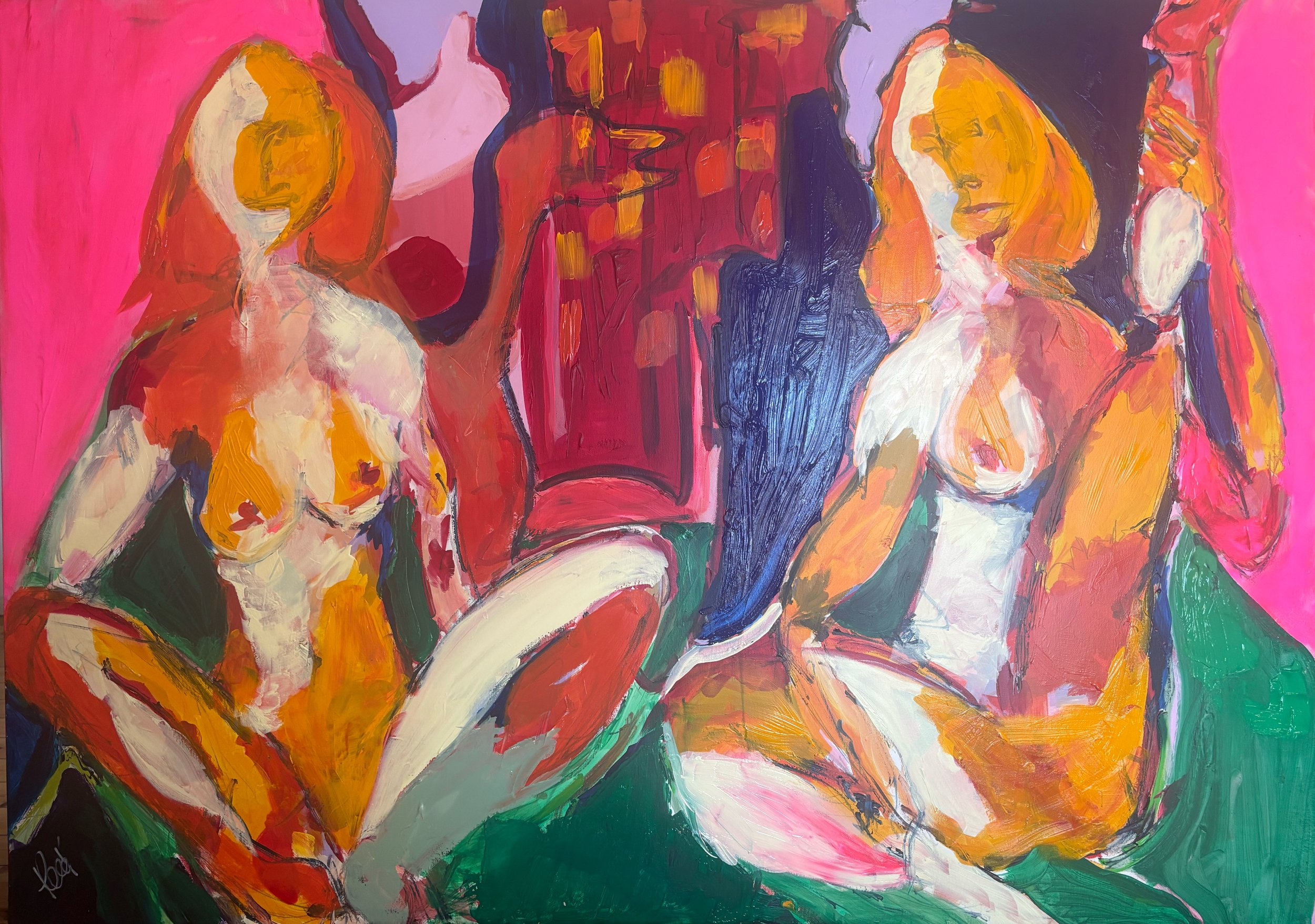
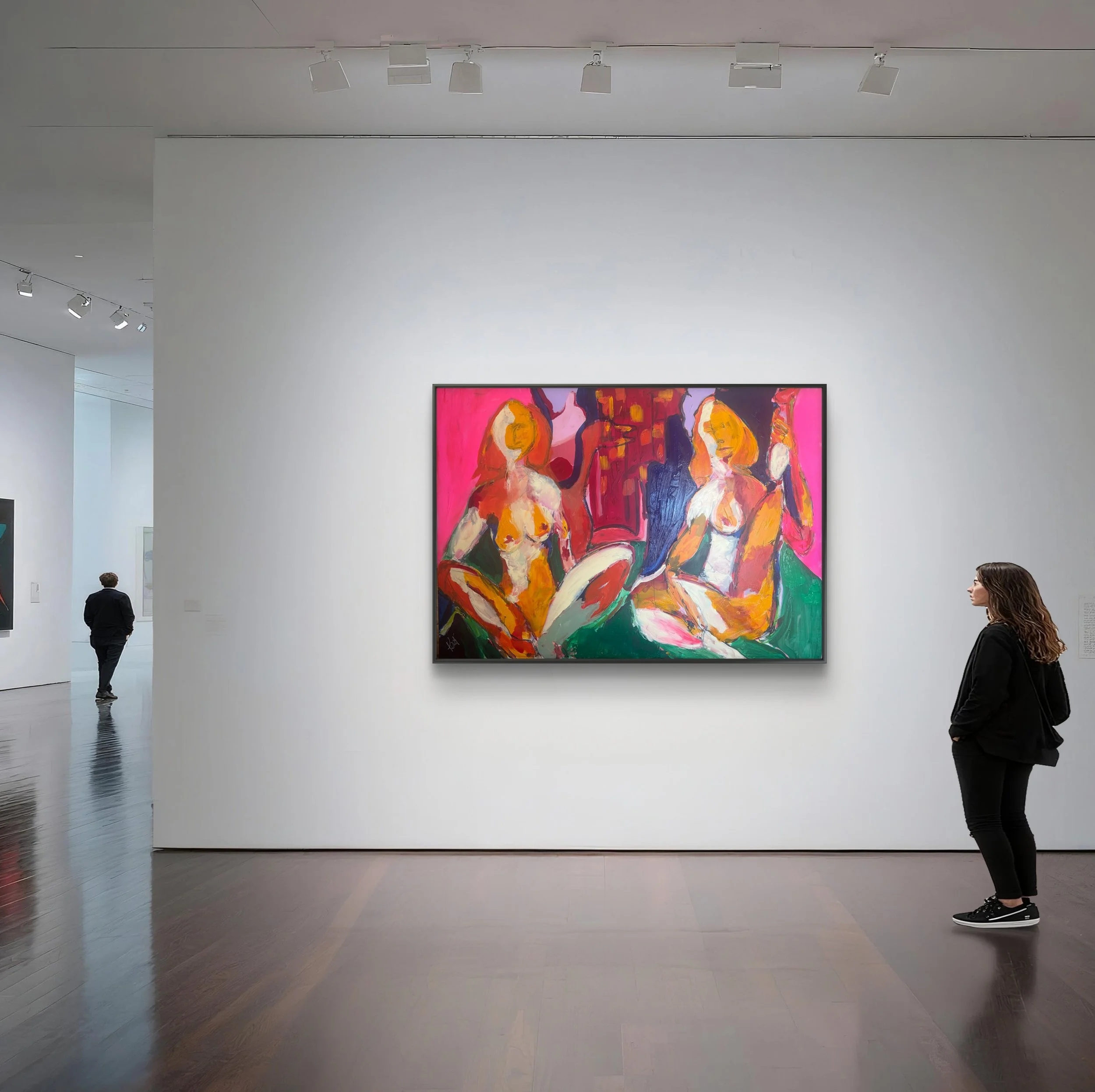
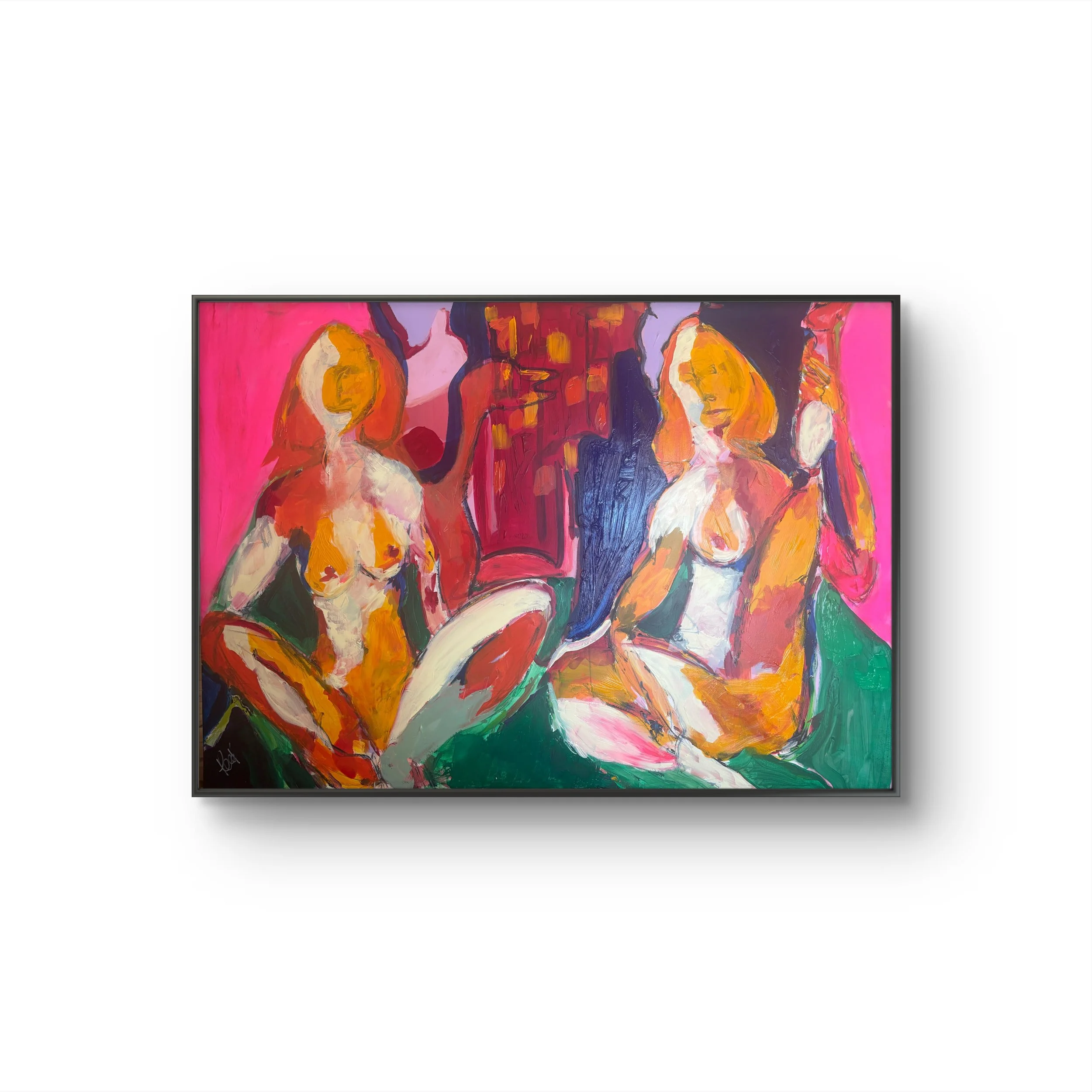
Two figures emerge within an urban space where the body becomes language, and language becomes body. CityZlang suggests something raw and immediate—a dialect of the city where identity is not fixed, but shaped through encounters, tensions, and shifts.
The two figures sit close, yet without direct contact. They are connected and separate at the same time, like people in a city: side by side, yet enclosed within their own inner narratives. Their forms echo one another as variations on a theme, with subtle displacements creating a rhythm—almost like a visual slang in which meaning is constantly slipping.
The colors are expressive and confrontational. Warm pinks and oranges vibrate against deeper blues and greens, evoking echoes of neon light, asphalt, and bodily heat. The paint exists in layers and movements, as if the image has emerged at the same pace as the city itself—fast, intense, and without full control.
The darker central form can be read as an urban axis—a street, a shadow, or an inner passage between the two figures. It both divides and connects, much like the city itself.
CityZlang explores the presence of the modern individual in the urban landscape: fragmented, sensing, and constantly in translation. Here, the body is not silent—it speaks in color, movement, and rupture.
❤️ KUNST MED OMTANKE – STØT KNÆK CANCER
50 % of the sale price of this artwork will go to Knæk Cancer in support of the fight against cancer.
This artwork is part of my personal initiative, Art with Compassion, through which I want to use my art to make a meaningful difference.
https://www.renejacobsenart.com/kunst-med-omtanke-stt-knk-cancer
CityZlang
Two figures emerge within an urban space where the body becomes language, and language becomes body. CityZlang suggests something raw and immediate—a dialect of the city where identity is not fixed, but shaped through encounters, tensions, and shifts.
The two figures sit close, yet without direct contact. They are connected and separate at the same time, like people in a city: side by side, yet enclosed within their own inner narratives. Their forms echo one another as variations on a theme, with subtle displacements creating a rhythm—almost like a visual slang in which meaning is constantly slipping.
The colors are expressive and confrontational. Warm pinks and oranges vibrate against deeper blues and greens, evoking echoes of neon light, asphalt, and bodily heat. The paint exists in layers and movements, as if the image has emerged at the same pace as the city itself—fast, intense, and without full control.
The darker central form can be read as an urban axis—a street, a shadow, or an inner passage between the two figures. It both divides and connects, much like the city itself.
CityZlang explores the presence of the modern individual in the urban landscape: fragmented, sensing, and constantly in translation. Here, the body is not silent—it speaks in color, movement, and rupture.
❤️ KUNST MED OMTANKE – STØT KNÆK CANCER
50 % of the sale price of this artwork will go to Knæk Cancer in support of the fight against cancer.
This artwork is part of my personal initiative, Art with Compassion, through which I want to use my art to make a meaningful difference.
https://www.renejacobsenart.com/kunst-med-omtanke-stt-knk-cancer